AIOctober 26, 20263 min read
How AI Is Reshaping the World of Software
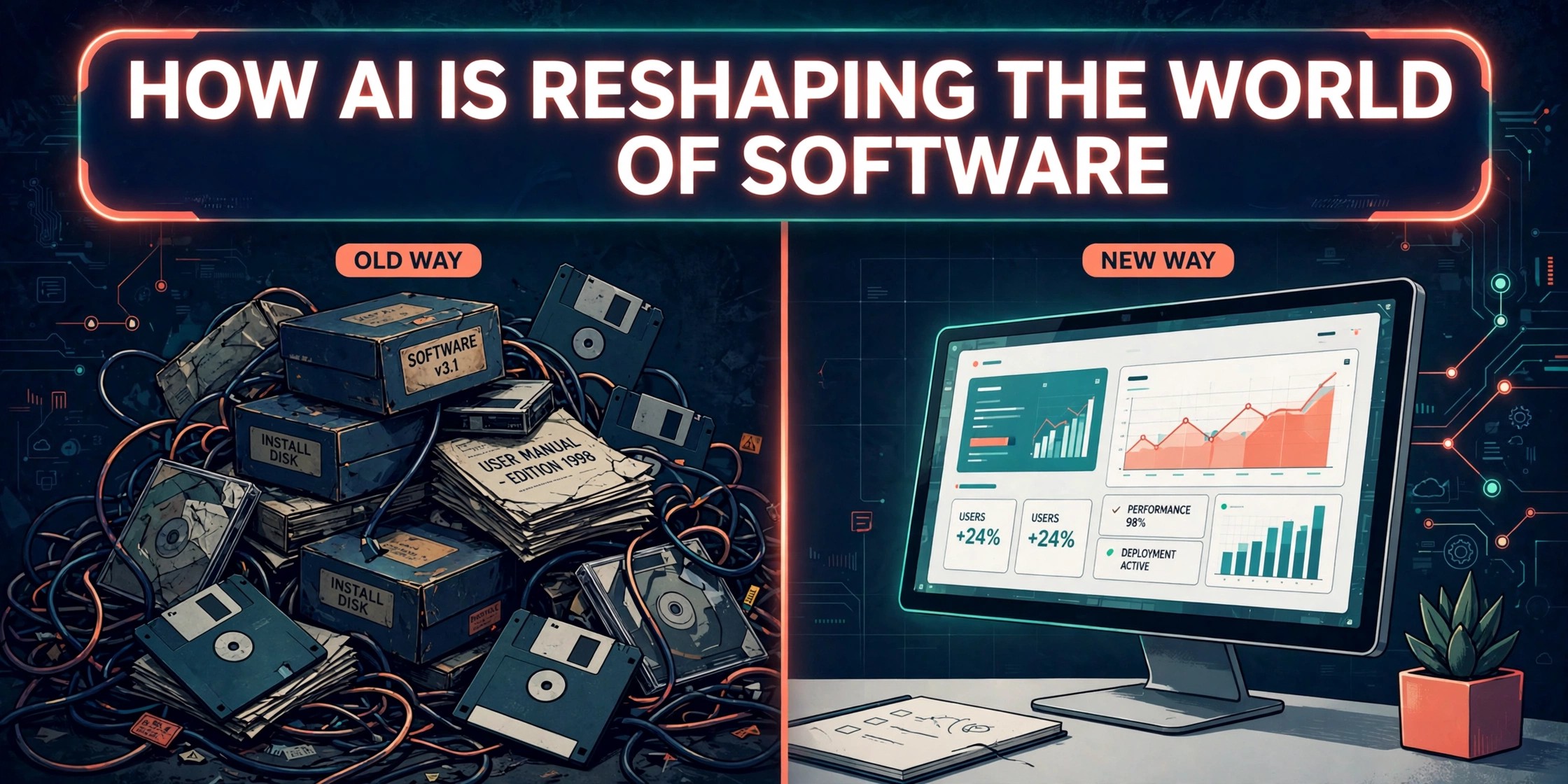
For most of the last forty years, software worked exactly one way. If you wanted a program built, you hired a team, waited through a long timeline, and paid a bill that made you sit down. Software was scarce — and because it was scarce, a handful of big companies got to decide what everybody else's tools looked like.
That model is breaking right now, and it isn't breaking slowly. AI hasn't just added a feature to the software business. It has changed what software costs to create in the first place — and when the cost of creating a thing collapses, everything built on the old cost eventually gets rebuilt.
Software Used to Be Scarce, Slow, and Expensive
The old economics were brutal, and every business owner has felt them. A custom application meant months of development, a five- or six-figure budget, and a maintenance bill that never stopped. So most businesses did the rational thing: they rented generic software and bent their own processes to fit it.
The hidden costs of that bargain added up quietly:
- Paying for features you never touch
- Running your business the way the software wants, not the way you want
- Exporting and re-entering the same data between tools that don't talk
- Waiting on a vendor's roadmap for the one feature you actually need
The Draft Is No Longer the Hard Part
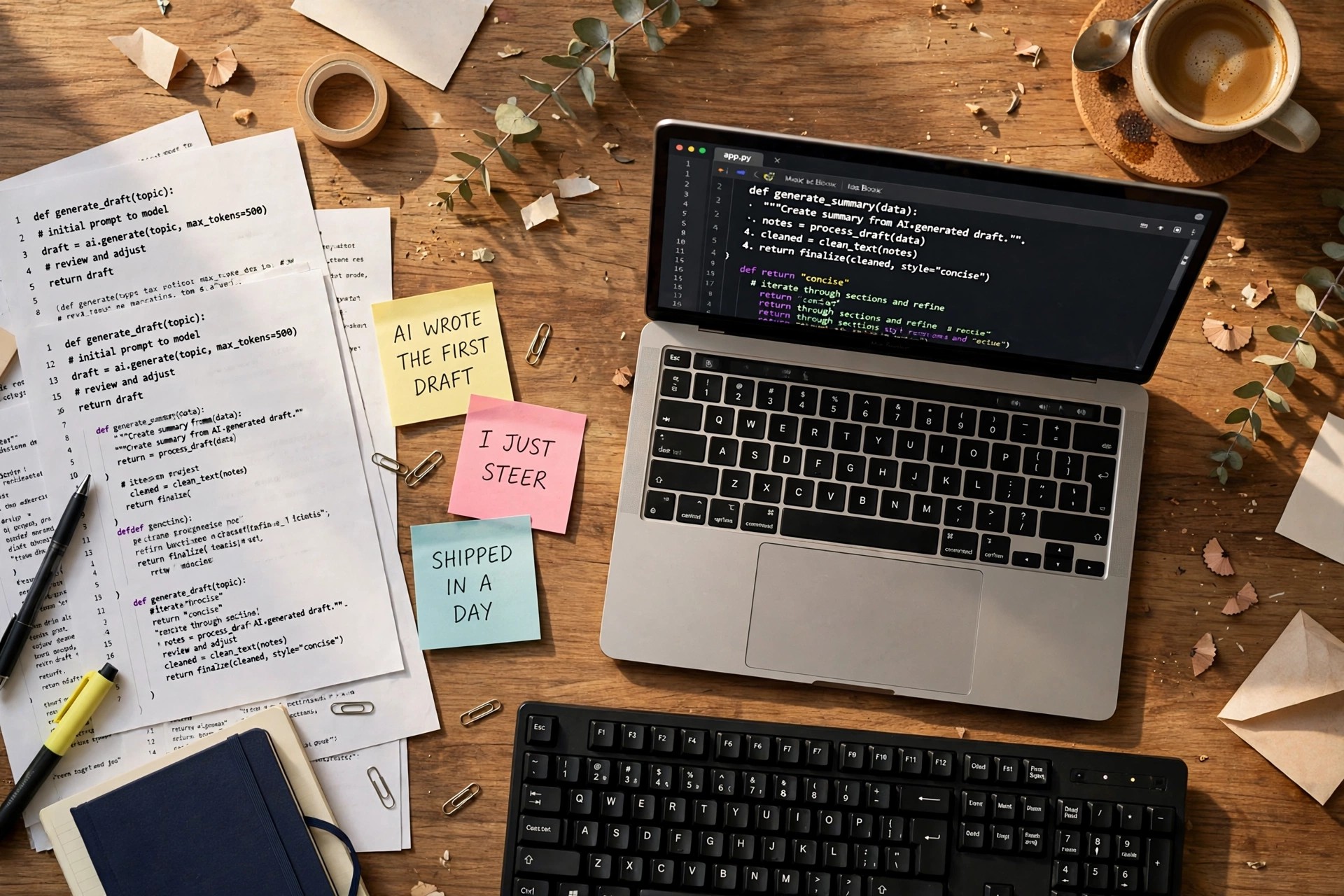
Here's what changed. Writing the first draft of software — the code, the screens, the structure — used to be most of the work. AI now produces that first draft in a fraction of the time, and a skilled builder steers, corrects, and finishes it. The scarce skill is no longer typing code. It's knowing what to build.
That flips the timeline on its head. Projects that were quoted in quarters now ship in weeks — sometimes days. The builder's job looks less like an assembly line and more like a workshop: judgment, taste, and experience up front, with the machine doing the heavy lifting underneath.
What This Means If You Buy Software, Not Build It
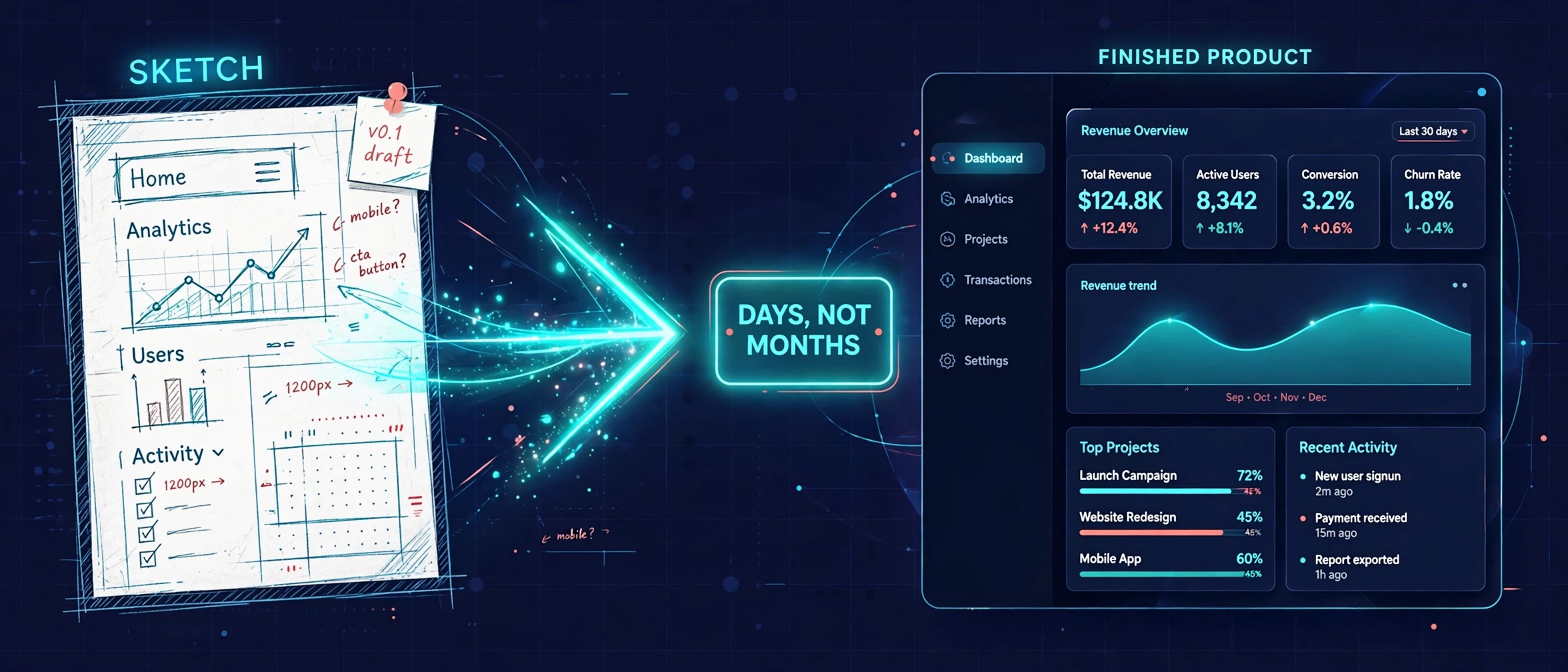
If you're a buyer, this shift is quietly excellent news. Custom software is moving down-market — within reach of businesses that could never justify it before. The question is changing from "can we afford to build this?" to "why are we still renting a tool that almost fits?"
Expect the big generic platforms to feel it first. When a business can get software shaped exactly around its own workflow for a fair price, paying premium rent for an 80% fit stops making sense. Vendors know it — that's why every one of them is racing to bolt AI onto products built for the old economics.
The Winners Won't Be the Biggest — They'll Be the Fastest to Adapt
Every technology shift has the same pattern: the advantage doesn't go to whoever has the most money. It goes to whoever adjusts first. Small, fast businesses are adopting AI-built tools while large competitors are still scheduling meetings about whether to allow them.
Software ate the world because it made businesses faster than the ones without it. Now AI is reshaping software itself — and the businesses that treat that as an opportunity instead of a threat are the ones that will look, a few years from now, like they saw it coming. Because they did.
Share this post:
Want a custom app, website, or SaaS platform built fast?
Explore Our Services