AIOctober 27, 20263 min read
From Apps to Agents: The Next Shift in Business Software
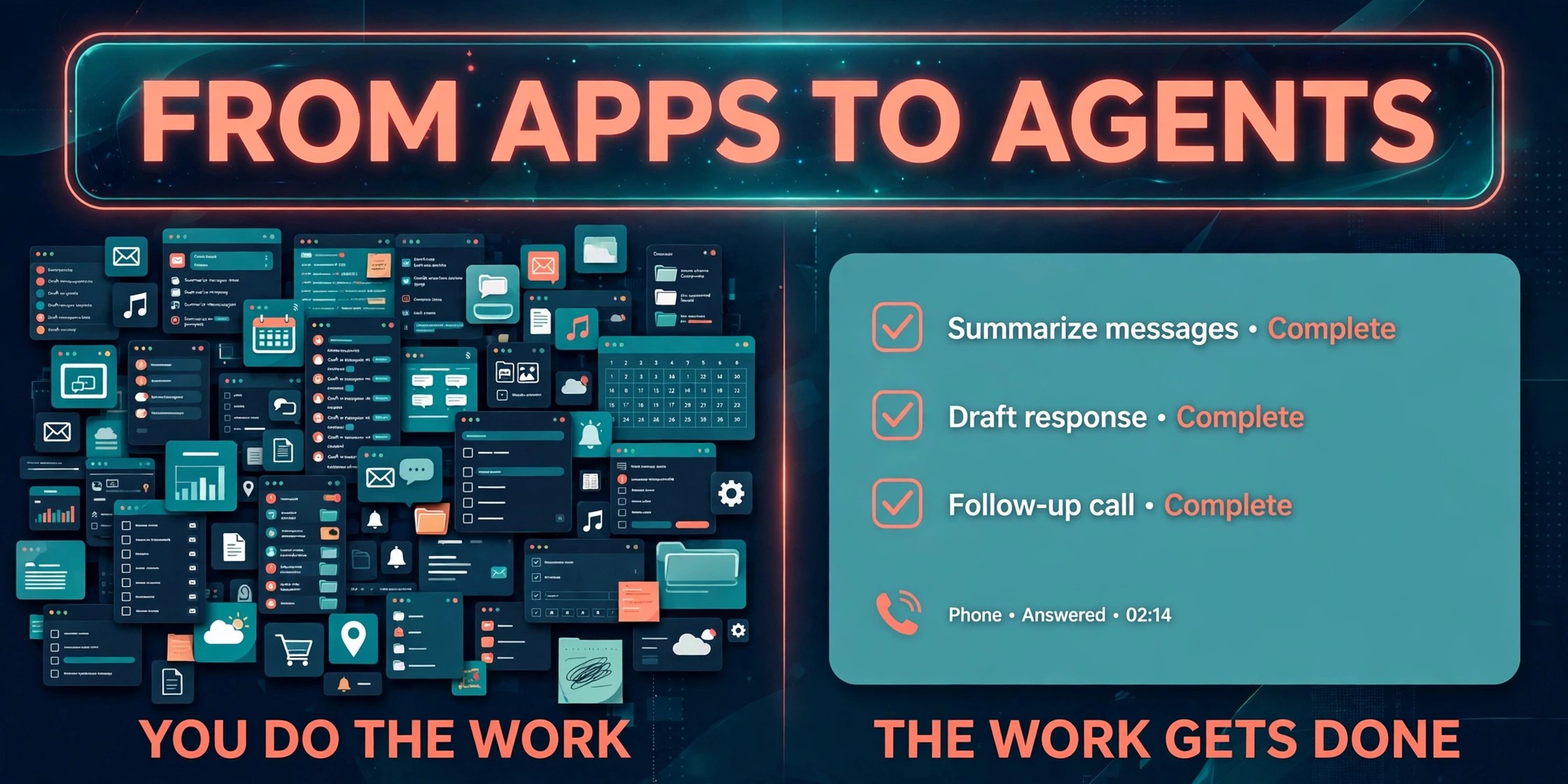
Count the logins your business runs on. Email, calendar, accounting, messaging, a CRM, a scheduling tool, a handful of apps you forgot you were paying for. Every one of them has something in common: it sits there, waiting, until a human opens it and does the work inside it.
That is the app model, and it has been the only model for decades — software as a tool you operate. The shift happening now is bigger than a new app. Software is starting to take the work itself: you hand it an outcome, it does the steps, and it reports back. Those are called agents, and they're about to reorganize your whole stack.
Apps Made You the Operator
An app is a chair you sit in. It holds the information, shows you the buttons, and stores what you did — but every click, every follow-up, every copy-paste between systems is yours. Businesses didn't get less busy when they computerized. They just moved the busywork onto screens.
The result is a strange kind of modern job: the owner as air-traffic controller, bouncing between a dozen tools, moving information from one to the next by hand. The software isn't lazy. It was simply never designed to do anything on its own.

Agents Flip the Job Description
An agent works the other way around. You give it a goal in plain language — keep the inbox handled, chase the overdue invoices, summarize today's messages — and it plans the steps, uses the tools, and comes back with the result. You stop operating software and start supervising it.
This isn't a robot replacing your judgment. It's the difference between a filing cabinet and an assistant. The cabinet stores; the assistant acts. Agents are software crossing that line for the first time, and it's why this shift matters more than any single app launch.
What This Looks Like in a Real Business

Picture an ordinary Tuesday in a business running on agents:
#1. The phone gets answered and the appointment booked while you're on a job site
#2. Your messages are summarized before you've had coffee — the three that matter, flagged
#3. Yesterday's new customers get their review requests and follow-ups automatically
#4. The weekly numbers are compiled and waiting, instead of somebody building them Friday
None of that requires a bigger team or a bigger software budget. It requires software that does work instead of storing it. Businesses adopting agents aren't buying more tools — most end up canceling a few, because one agent covers ground that used to take three apps and a person's afternoon.
You Stay the Boss — the Software Finally Does the Labor
The honest concern is control, and it's a fair one. Good agent setups keep the human in charge of the decisions that matter: the agent drafts, the owner approves; the agent handles the routine, the owner handles the exceptions. Supervision replaces operation — it doesn't disappear.
Apps asked you to serve the system. Agents are built to serve you. The businesses that make this shift early won't just save hours — they'll wonder how they ever ran the place the other way. That moment is coming faster than most owners expect.
Share this post:
Want a custom app, website, or SaaS platform built fast?
Explore Our Services